
Two Methods for Calculating Diminished Value
When you're in an accident that wasn't your fault, you have the right to claim diminished value from the at-fault driver's insurance. But how much? There are two established approaches:
- The 17c Formula — the industry-standard method most insurers use. Produces systematically low estimates.
- Market-Based Analysis — compares actual sale prices of vehicles with and without accident history. Reflects your real loss.
Knowing both — and the gap between them — is your most powerful negotiating tool.
Method 1: The 17c Formula
The 17c formula was established in the 2001 Georgia decision State Farm v. Mabry and is widely used by insurers. Here's how it works:
What You Need
- Pre-accident ACV (Actual Cash Value) — check Kelley Blue Book, CarGurus, or NADA
- Total repair cost
- Damage severity level (cosmetic, minor, moderate, major, structural)
- Current odometer reading
The Calculation
Damage multipliers: 0.00 (cosmetic only) → 1.00 (structural/airbag deployment)
Mileage multipliers: 1.00 (0–19,999 mi) → 0.00 (60,000+ mi)
17c Example — 2022 Honda CR-V
Method 2: Market-Based Analysis
Market-based analysis looks at actual transaction data to determine how much your vehicle's accident history reduces what buyers will pay. This is the approach professional appraisers use and what courts in many states accept as the most accurate measure of your loss.
How Market Analysis Works
- Find 3–5 listings for the same year/make/model/trim as your vehicle with clean CARFAX
- Find 3–5 listings for the same vehicle with disclosed accident history
- Calculate the average price difference
- Adjust for mileage, condition, and damage severity
Market-Based Example — Same 2022 CR-V
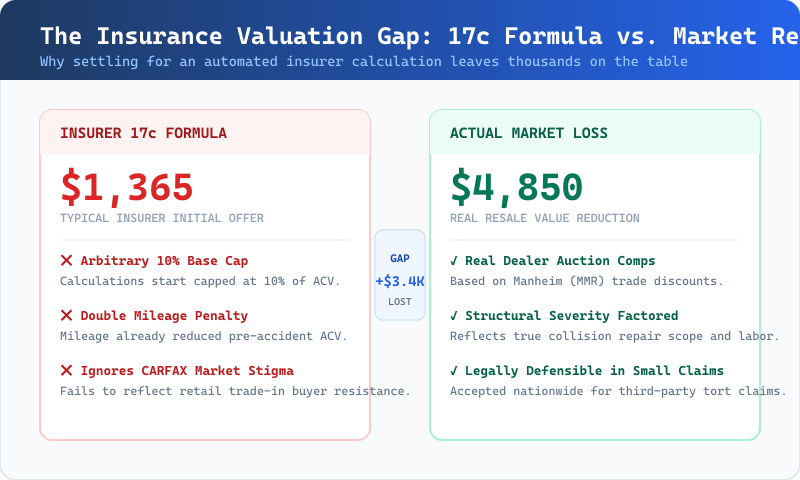
The Gap: $1,995
The 17c formula produces $1,305. Market analysis shows you actually lost $3,300. The insurer is offering to pay you $1,995 less than your documented market loss. This gap is what a professional report and demand letter help you recover.
Which Method Should You Use?
Use both. Here's why:
- The 17c result tells you the minimum the insurer is likely to offer
- The market result tells you what you actually lost and what you should demand
- Showing both in a formal demand letter demonstrates you've done your homework and forces a real negotiation
When to Get a Professional Appraisal
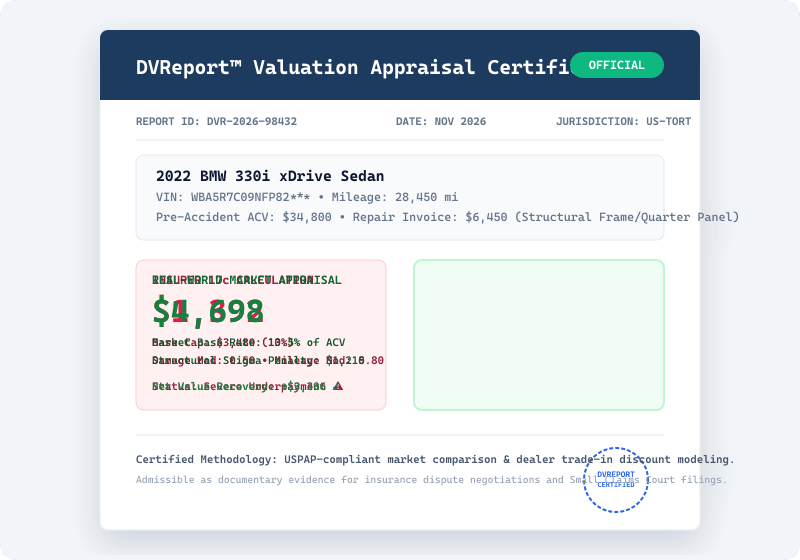
For claims over $3,000–$5,000, consider hiring a certified vehicle appraiser or using a professional DV report service. A certified appraisal:
- Carries more weight with insurers and in court than a DIY calculation
- Documents the methodology in a legally defensible format
- Often pays for itself many times over in recovered DV
Quick Reference: What Affects Your DV Amount
| Factor | Impact on DV |
|---|---|
| Newer vehicle (1–3 years old) | Higher DV — buyers pay more for clean-title newer cars |
| Luxury brand (Tesla, BMW, Mercedes) | Higher DV — premium buyers are more sensitive to history |
| Structural/frame damage | Highest DV — greatest buyer concern |
| High mileage (60K+) | Lower per 17c formula, but still real market impact |
| Cosmetic damage only | Lower DV — buyers less concerned about paint history |
| High pre-accident ACV | Higher DV in absolute dollars |
Frequently Asked Questions
- Which diminished value calculation method should I use?
- Use both 17c and market-based methods. 17c approximates what insurers may offer; market comps show what buyers pay for clean vs accident history.
- Where do I get pre-accident ACV?
- Kelley Blue Book, NADA, CarGurus, and dealer quotes are common sources. Save screenshots with date and trim level.
- How many comparable listings do I need?
- Three to five pairs (clean title vs accident history) with similar year, trim, and mileage is a practical starting point.
- When is a professional appraisal worth it?
- For claims in the low thousands or more, or when the insurer disputes your DIY math, a certified appraiser or structured PDF report can help.
Sources & further reading
Statutes, claim rules, and settlement amounts depend on your state and facts. Use these references for methodology and history — not as legal advice.
Disclaimer: This guide is for informational purposes only and does not constitute legal advice. Diminished value calculations and claim rights vary by state and individual circumstances.